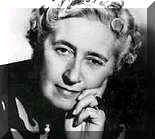
Agatha Christie
| Biography | Achievements | Focus | Media |

Agatha Christie was born in 1890 in Torquay in England. Her father was called Frederick Miller so she was born Agatha Mary Clarissa Miller. She was educated at home and studied singing and piano in Paris.
In 1914 she married Archibald Christie, but the first world war broke out. Agatha worked as a nurse in a red cross hospital in Torquay at that time and that experience was useful later on. Her first book was published in 1920, “The mysterious affair at Styles”. In this story , readers met Hercule Poirot, the eccentric belgian detective with the funny-looking moustache.
But Agatha’s book first attracted attention in 1926 when she published “The murder of Roger Ackroyd”. Agatha made news herself when she disappeared for a few days after her husband wanted a divorce. She was soon found to be staying in a hotel under an alias. Her disappearrance is still a mystery. She and Archibald divorced in 1928. When she was around 40 years old she went on a holiday and visited Irak where she met archaeologist Max Mallowan, who was 14 years younger than her. They married in 1930.
During World War II, Agatha worked in the dispensary of the University College Hospital in London. She often assisted her husband on excavations in Irak and Syria.
She wrote nearly seventy novels in her career and more than a hundred short stories. Her most famous characters are Hercule Poirot and Miss Marple, and the latter one was her personal favourite. Agatha also wrote six romantic novels under the name Mary Westmacott.
Agatha’s plays have also made her famous and her best known play, The mousetrap, is most likely the best known mystery play in the world. Agatha became Dame Agatha in 1971.
Agatha Christie died on the 12th of january 1976
 |
 |
 |
Achievements :
1920 : The mysterious affair at styles
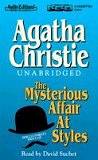 With impeccable timing Hercule Poirot, the
renowned Belgian detective, makes his dramatic entrance on to the English crime
stage.
With impeccable timing Hercule Poirot, the
renowned Belgian detective, makes his dramatic entrance on to the English crime
stage.
Recently, there had been some strange goings on at Styles St Mary. Evelyn,
constant companion to old Mrs Inglethorp, had stormed out of the house muttering
something about 'a lot of sharks'. And with her, something indefinable had gone
from the atmosphere. Her presence had spelt security; now the air seemed rife
with suspicion and impending evil.
1926 : The murder of Roger Ackroyd
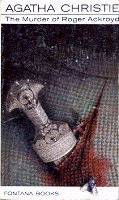 Roger Ackroyd knew too much. He Knew that the woman he loved had
poisoned her brutal first husband. He also suspected that someone had been
blackmailing her. Now, tragically, came the news that she had taken her own life
with a drug overdose.
Roger Ackroyd knew too much. He Knew that the woman he loved had
poisoned her brutal first husband. He also suspected that someone had been
blackmailing her. Now, tragically, came the news that she had taken her own life
with a drug overdose.
1934 : Murder on the Orient-express
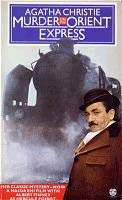 Just after midnight, a snowdrift stopped the Orient Express in its
tracks. The luxurious train was surprisingly full for the time of year. But by
the morning there was one passenger fewer. An American lay dead in his
compartment, stabbed a dozen times, his door locked from the inside.
Just after midnight, a snowdrift stopped the Orient Express in its
tracks. The luxurious train was surprisingly full for the time of year. But by
the morning there was one passenger fewer. An American lay dead in his
compartment, stabbed a dozen times, his door locked from the inside.
With tension mounting, detective Hercule Poirot comes up with not one, but two solutions to the crime.
1937 : Death on the Nile
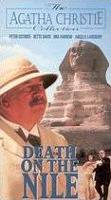 The tranquillity of a cruise along the Nile was shattered by the
discovery that Linnet Ridgeway had been shot through the head. She was young,
stylish and beautiful. A girl who had everything ... until she lost her life.
The tranquillity of a cruise along the Nile was shattered by the
discovery that Linnet Ridgeway had been shot through the head. She was young,
stylish and beautiful. A girl who had everything ... until she lost her life.
Hercule Poirot
recalled an earlier outburst by a fellow passenger: 'I'd
like to put my dear little pistol against her head and just press the trigger'.
Yet in this exotic setting nothing was ever quite what it seemed.
1939 : Ten little niggers
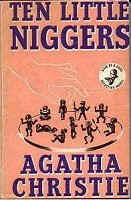 Ten
strangers, apparently with little in common, are lured to an island mansion off
the coast of Devon by the mysterious U.N.Owen.
Ten
strangers, apparently with little in common, are lured to an island mansion off
the coast of Devon by the mysterious U.N.Owen.
The tension escalates as the survivors realise the killer is not only
among them but is preparing to strike again... and again.
|
|
Ten little niggers , the famous detective story carefully analysed for you by our detectives ... |
 |
 |
... to "Ten little Indians" (from "Ten little Niggers" |