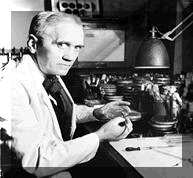
Alexander Fleming was born in a Scottish farm
in1881. He and his brothers and sisters spent much of
their time ranging through the streams, valleys
and moors of the countryside. After completing school
he was employed by a shipping firm. In 1900 when
the Boer war broke out between the
United
Kingdom and its colonies in South Africa Alec joined a Scottish regiment. This
turned out to be as
much as a sporting club as anything.
Soon after this Alec’s uncle died and Alec was
encouraged to put
his legacy toward the study of medicine. In 1906
he became a researcher in vaccine
therapy. In 1909 a German chemist–physician
developed a chemical treatment for syphilis. He had
tried hundreds of compounds and the”
606 th” worked. It was named salvarsan (which means “that
which saves by arsenic”). The only previous
treatment had been so toxic as to often kill the patient.
Fleming became one of the very few physicians to
administer salvarsan through the technique of
intravenous injection. He soon was nicknamed “private 606 “
He wrote many papers on bacteriology, immunology
and chemotherapy.
He was a specialist in the immune system and during World War I he worked on the
antiseptics.
In
the case of Infections ,the easiest treatment consisted in
washing the infection with copious saline. An idea which
was difficult to admit by most surgeons of that
time. In 1921 Fleming discovered Lysozyme, a culture
of his own nasal mucus, which later brought
larger medical applications of this discovery. Fleming’s work paved the way for the discovery of
penicillin a few years later in 1928 he was straightening
up a
pile of Petri dishes where he had been growing
bacteria but which had been piled in the sink. He
examined each one and discovered that some mold
was growing on one of the dishes but
that all
around the mold, the staph bacteria had been
killed. He found out that the mold was from the penicillium family. It took World War II to revitalize interest in penicillin .
Sir Alexander
Fleming was knighted in1944 and awarded the
Nobel Prize in 1945.
Dr Fleming died on March 11th in 1955
and is buried in St Paul’s Cathedral.
Focus :
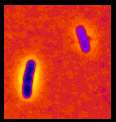 |
Was Sir Alexander Fleming the first one to discover
penicilin ? How does this stuff work on bacteria ? We'll try to make
you understand... |
Media :